What would it take to walk to the grocery store in your Denton neighborhood?
Try this: open a map and put a pin on your house. Now draw a one-mile circle around it. Is there a grocery store inside that circle you could realistically walk to?
For most Denton residents, the answer is no.
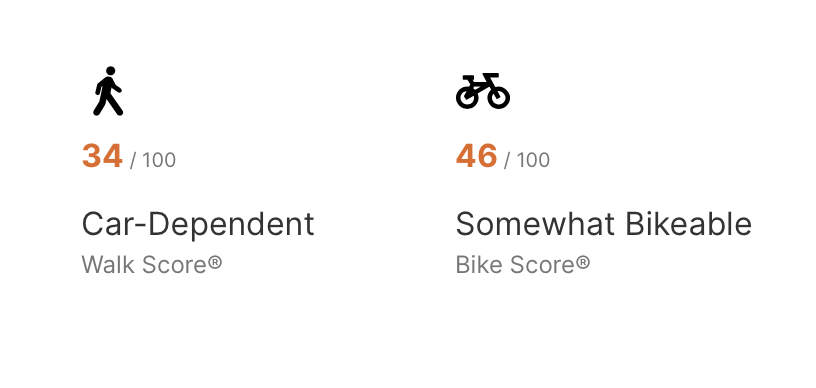
Credit: Redfin
Denton has a Walk Score of 34 out of 100 — a rating that means most errands require a car. That's not a criticism of the people who live here. It's a description of how the city was built. And it has real consequences for your daily life, your wallet, and your neighborhood's future.
Why does walkability matter?
When you can walk to get groceries, you save money on gas and car maintenance. You're more likely to stop into a local shop along the way. You run into your neighbors. Kids can get around independently. Older residents can age in place without depending on someone else for a ride.
But there's a bigger picture too. Walkable neighborhoods generate more tax revenue per acre for the city than car-dependent ones. They require less infrastructure to maintain. They're more financially resilient over time. A block of shops you can walk to is worth more — to you and to Denton — than a strip mall you can only drive to.
Where in Denton can you walk?
Downtown Denton is the clear exception. Within a few blocks of the Courthouse Square, you can walk to restaurants, coffee shops, bookstores, and a handful of services. It's walkable in a way that feels genuinely alive — and not coincidentally, it's also one of the most economically productive areas in the city.
My family and I frequently walk, bike, or scooter to Movie Tavern, Denton Thrift, convenience stores, and coffee shops from our neighborhood in the North Lakes Park area. But even then, the route to our destinations are not always safe or convenient.
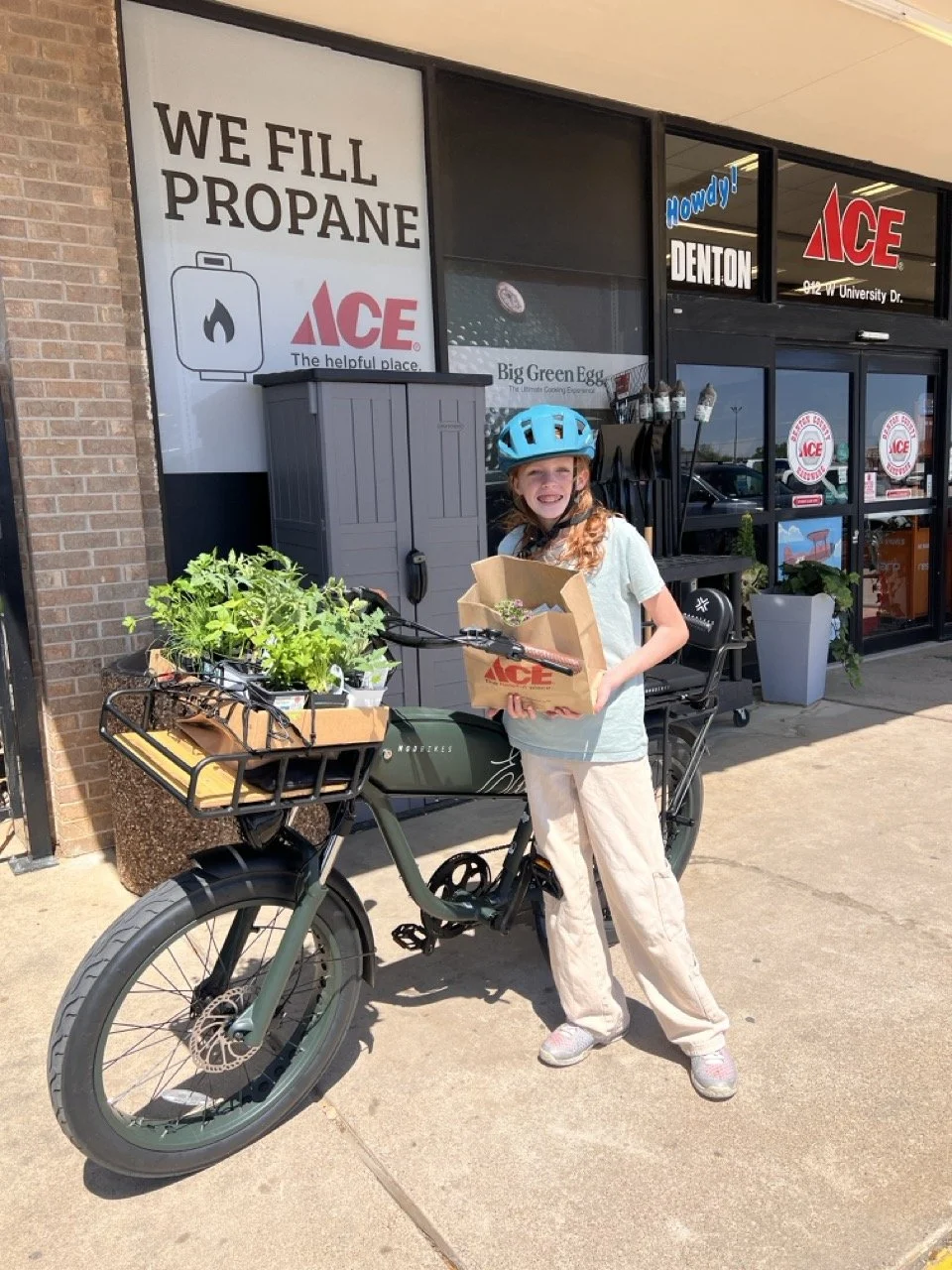
Lauren and her daughter rode her e-bike recently to Ace Hardware for herbs.
Most other Denton neighborhoods? The sidewalks end. The distances stretch. The crosswalks disappear. A trip to the nearest store becomes a 15-minute drive even if you live just a mile away.
This didn't happen by accident
Denton, like most Texas cities, was built around the car for decades. Zoning rules separated homes from shops. Minimum parking requirements pushed buildings back from the street. Wide, fast roads made walking feel unsafe even where sidewalks existed.
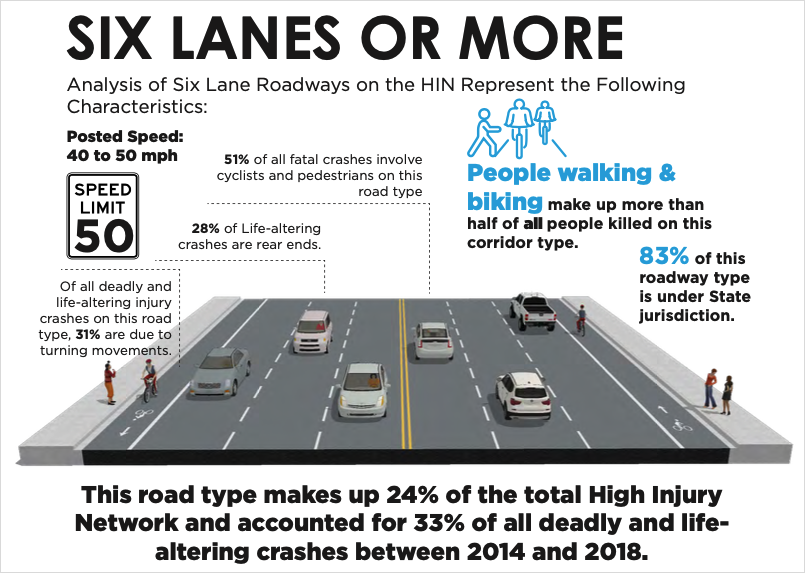
The result is a city where you almost always need a car — which means you always need to pay for one. For a family spending $800–$1,000 a month on car ownership and gas, that's a significant hidden cost of living in a car-dependent neighborhood.
What would it take to change it?
It starts with small, incremental things. Filling in missing sidewalk gaps. Allowing corner stores and small shops to open in residential neighborhoods. Making it legal — and financially sensible — to build housing above a business. Connecting trail networks so they actually go somewhere useful.
None of this requires tearing anything down. It just requires making different choices, one block at a time, as the city grows and rebuilds.
Want to see walkability improve in your part of Denton?
We’re glad you do! There are a few ways to make small improvements in your neighborhood.
Attend or watch the city’s Mobility Committee Meetings. This committee is held monthly on Wednesdays at 10am at City Hall and is comprised of three council members and two citizen members. They are presented with road construction updates from the city and state, upcoming projects and proposals, and plans to make Denton more walkable. There is an opportunity for residents to share comments on the microphone at the beginning of the meeting. This is a great time to give your perspective to the committee and staff. Learn more about the Mobility Committee here.
Contact your City Council representative and the Council Members on the Mobility Committee. These leaders are here to give a voice to the transportation issues that Denton residents face. Take the time to connect with them to share your challenges and observations about getting around Denton on foot or bike. Find the Council Members here.
Report sidewalk issues, broken crosswalk buttons, and other walkability concerns through Denton 311. This is the city’s main contact method for reporting issues on our streets. Take a photo of something that’s not right. You can upload it when you make a report on the app or online. Or, you can simply dial 3-1-1 and talk to dispatch to make a report. This is a vital option for average folks to keep the city staff informed of gaps in walkable places. Learn more about Denton 311 here.
Read up on the City of Denton’s Mobility Plan and Vision Zero goals. Our city staff has some great ideas to move our city into a more equitable future where residents can get around without the need of a car. See what you like? Reach out to the Transportation Division and your City Council to share your thoughts.
Add points of concern on the Vision Zero Interactive Map to alert staff where our most dangerous and challenging spaces are within the city.
Join Stronger Denton meetups to discuss grassroots ideas to improve Denton’s walkability. There are people like me who are obsessed with creating a more walkable and enjoyable city! We meet monthly on Monday nights for a casual discussion. See our upcoming events.
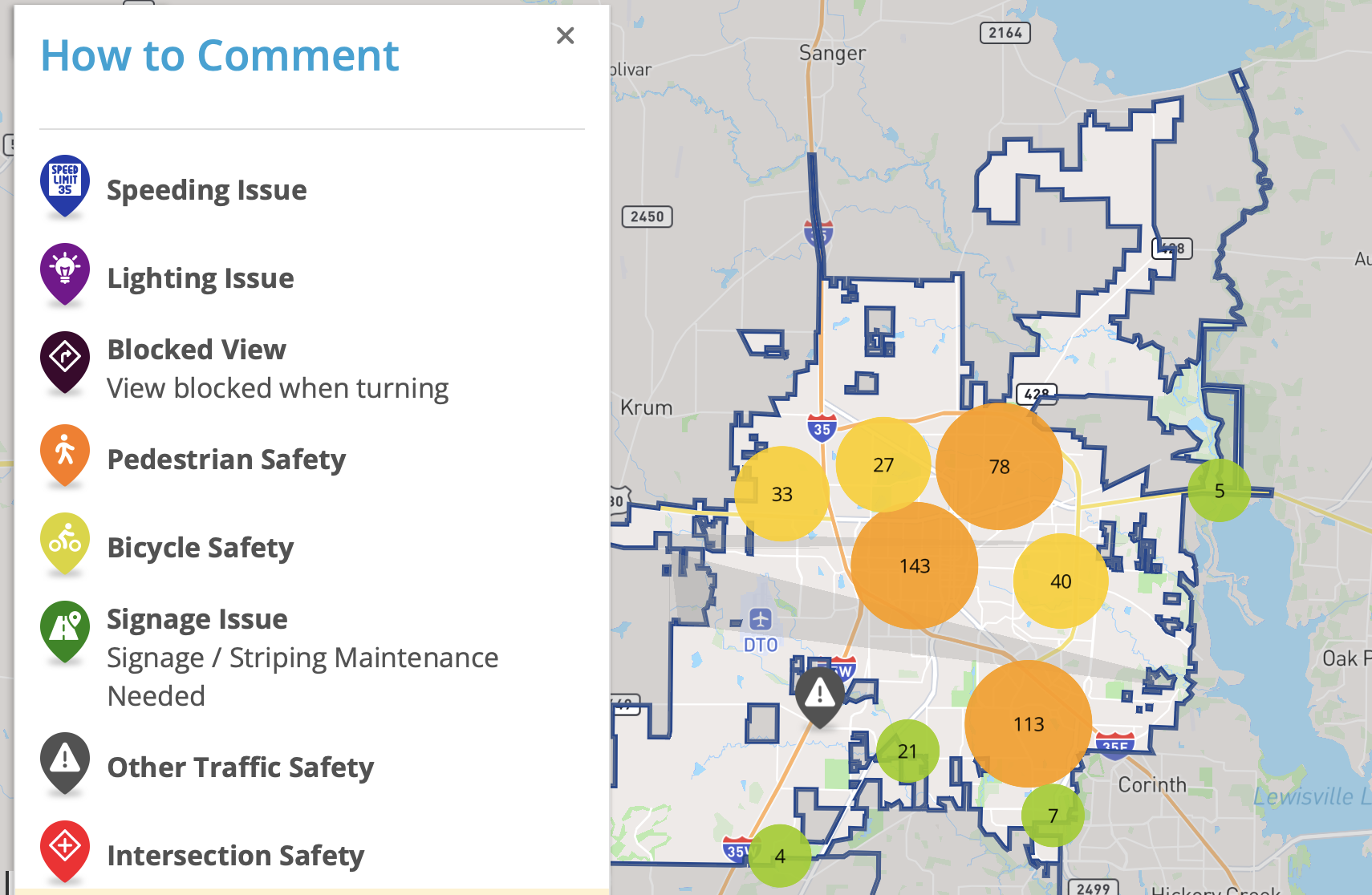
Vision Zero Interactive Map: https://engagekh.mysocialpinpoint.com/denton-vzap/interactive-map
Denton is growing fast. The question isn't whether our city will change — it will. The question is whether that change makes it easier to walk to a grocery store, or harder.
We think the answer should be easier. And we're working to make that case, one neighborhood at a time.